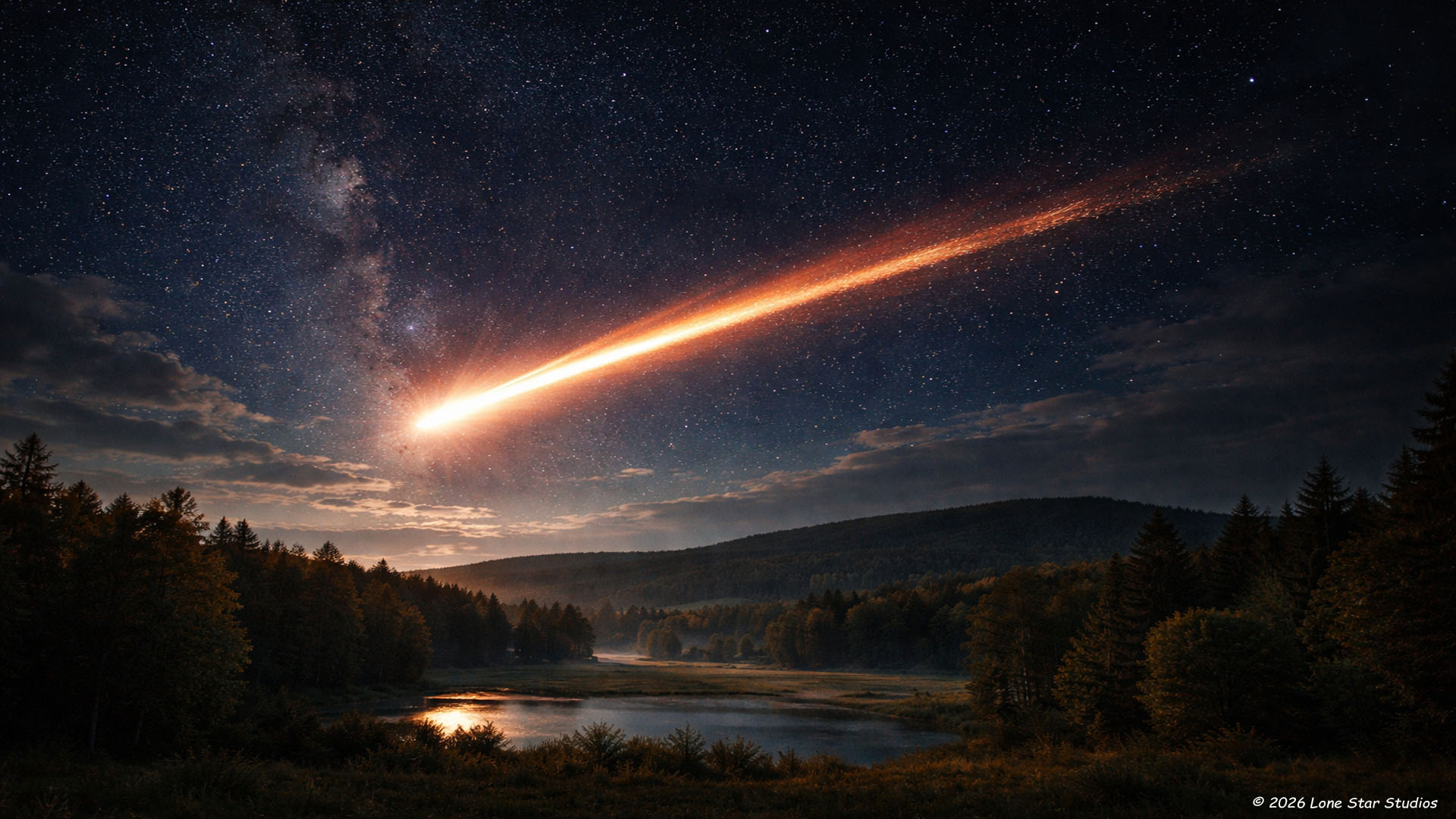
METEORS LIGHT UP THE SKIES ACROSS THE EARTH ☄️
Over the past couple of weeks, sky-watchers across the United States have witnessed a noticeable uptick in bright meteors, often described as fireballs or shooting stars, streaking across the sky. Around the globe reports have poured in from both amateur stargazers and official tracking organizations, sparking curiosity and excitement about what exactly is happening above us.
What People Are Seeing
These recent sightings are not your typical faint shooting stars. Many of the meteors reported have been exceptionally bright, lingering longer in the sky and sometimes even breaking apart mid-flight. In several cases, witnesses have described glowing fragments and flashes that briefly lit up the surrounding landscape.
Meteors have been seen flying over California, Ohio, Pennsylvania, and Texas recently.
Some sightings have occurred in the early evening, making them visible even in areas with moderate light pollution. Others have taken place in the early morning hours, when darker skies allow for clearer viewing conditions.
Why So Many Meteors Right Now
The increase in visible meteors can often be linked to Earth passing through debris streams left behind by comets. When these tiny particles enter Earth’s atmosphere at high speeds, they burn up due to friction, creating the bright streaks we see.
While no single major meteor shower has dominated headlines during this specific window, several smaller or overlapping meteor activity periods can contribute to an apparent surge. Additionally, random meteoroids not tied to known showers can enter the atmosphere at any time, occasionally producing especially bright fireballs.
While it’s true that these type of events happen all the time somewhere on Earth, the number of occurrences the past few weeks combined with how many have been caught on camera makes these events unique. One crashed through a woman’s roof in Houston, and the meteorite that crashed into the ground in Ohio created a loud enough explosion sound that it could be heard both in Ohio and Pennsylvania.
A Quick Terminology Review
Comet – Ice, Space Dust, and Rock, will produce a glowing tail near the Sun
Asteroid – Rock and Metal in space, usually not visible from Earth
Comets and Asteroids are both real objects in space orbiting the Sun. All of the other terms to follow describe where pieces breaking off of one of those two are located in relationship to the Earth.
Meteoroid – A piece of debris broken off of a Comet or Asteroid flying through space
Meteor (Shooting Star) – If the debris enters the Earth’s atmosphere, then it is known as a meteor
Meteorite – A meteor that hits the ground before burning up in the atmosphere is known as a meteorite
Did you know?
The word Meteorologist comes from Greek roots and literally means “someone who studies things in the air.”
Meteor comes from the Greek meteoros meaning “high in the air” or “things suspended in the sky”.
“-logist” comes from logos meaning the “study” or “science of”.
So, there you go! A little love for My Big Fat Greek Wedding, if you know, you know. I couldn’t help but think of it.
I heard somebody on the Weather Channel this week make the case that we’re all meteorologists when you look at the literal meaning of the word.
What Makes a Fireball Different
A fireball is simply a meteor that shines brighter than the planet Venus in the night sky. These are relatively rare compared to standard meteors, but when they do appear, they tend to generate widespread attention.
Some fireballs are caused by slightly larger pieces of space debris, which can survive longer during atmospheric entry. In rare cases, fragments may even reach the ground as meteorites, though most burn up completely before impact.
Tracking and Verification
Organizations like the American Meteor Society and NASA actively collect reports from the public to track these events. By compiling eyewitness accounts, video footage, and sensor data, they can estimate the meteor’s path, speed, and even potential landing zones.
In recent weeks, both organizations have logged multiple fireball events across different states, confirming that this spike in sightings is real and not just anecdotal.
Are These Events Unusual?
While it may feel like meteors are appearing more frequently than usual, experts suggest that several factors could be contributing to the perception. Increased public awareness, the widespread use of home security cameras, and social media sharing have made it easier than ever to capture and report these fleeting events.
At the same time, natural fluctuations in meteor activity can lead to short periods where sightings are more common.
The main reason many believe we’re seeing more meteors is that Earth is passing very closely to and through the path that the interstellar comet 3I/ATLAS passed through near the end of last year. So, essentially any debris that the comet left behind flying through space is just now intersecting the Earth’s atmosphere. I believe most people expect these sightings to continue to be possible into the first or second week of April and then die down as the Earth vacates that area of space. It’s really fascinating when you think about it!
What to Watch For Next…
Meteor activity continues year-round, with certain times offering better chances to catch a glimpse. Clear skies, low light pollution, and patience remain the key ingredients for a successful viewing experience.
If the current trend continues, more meteor sightings could be reported in the coming weeks, giving sky-watchers plenty of opportunities to look up and catch a moment of cosmic wonder.
So, keep looking up, and let your light shine!
Videos included in this article created by YouTube creator hunt1803 and used under a CC-BY license.